» Home » Blog » Summer and Winter Risks: A Boardroom Weather Agenda
Summer and Winter Risks: A Boardroom Weather Agenda
Executive TLDR: India’s increasingly erratic Summer and Winter seasons have moved from operational headache to balance-sheet risk. Boards that translate forecasts into capital and operating decisions—via structured exposure mapping, forecast-to-action…
By pythonapiuser@gmail.com
08. 05. 20268 minutes
Executive TLDR: India’s increasingly erratic Summer and Winter seasons have moved from operational headache to balance-sheet risk. Boards that translate forecasts into capital and operating decisions—via structured exposure mapping, forecast-to-action playbooks, and hybrid risk transfer—can turn climate volatility into a managed, even strategic, variable.
Introduction
For decades, weather sat below the strategy horizon—an uncontrollable variable to be endured. That posture no longer works. Record-breaking heatwaves, delayed monsoons, flash floods and bitter northern cold snaps are colliding with dense supply chains, 24×7 digital operations, and renewable-heavy power grids. Temperature Now a days no longer drifts around historical means; it spikes, stalls supply, and erodes productivity. When 4–5 % of GDP is at stake by 2030, the leadership question becomes: how will we embed physical climate risk, season by season, into core decision systems?
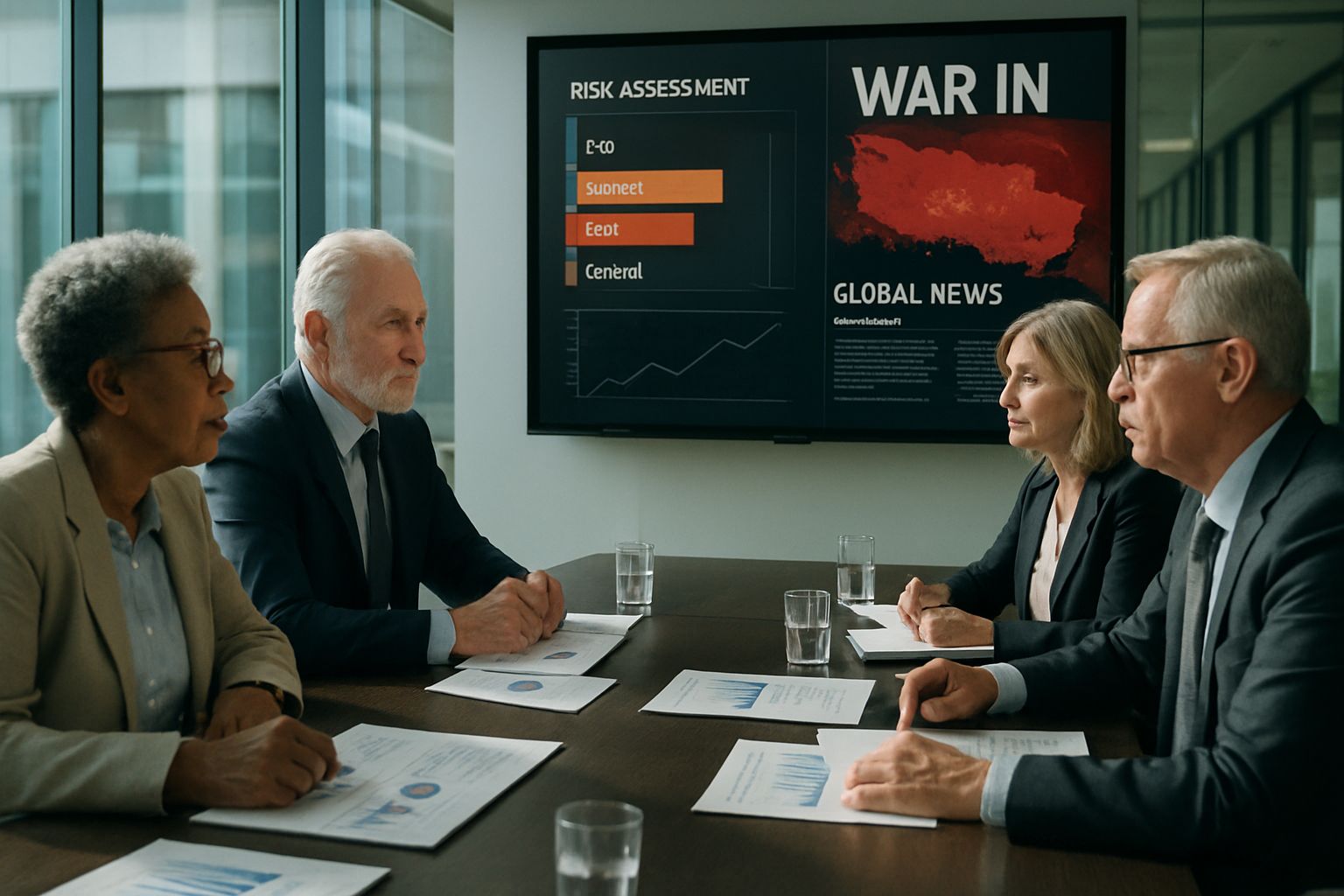
Operational leaders track the immediate effects of seasonal extremes, aligning business continuity strategies with weather-driven data.
Summer and Winter Realities
India’s Summer and Winter cycles are diverging from the comforting averages executives grew up with. IMD’s long-range models flag a 92 % probability of below-normal monsoon rainfall this year, while AI-enhanced nowcasts warn of higher-frequency convective storms and earlier heat onset. On the other side of the calendar, northern states have experienced three of the coldest January minima in a decade, stressing energy demand planning. These two book-ends—searing heat and unexpected cold—now define the operating envelope for logistics, agriculture, construction, and grid stability.
Misconception one: “Climate change is a long-term story.” In reality, short-term anomalies—monsoon timing, cold snaps—drive immediate P&L shocks. Misconception two: “National forecasts are enough.” They are not. Hyper-local wind shifts can swing solar output 15 % within an hour and flood a single industrial park while a city remains dry. Boards must therefore push for probabilistic, high-resolution data and ensure it feeds directly into the metrics they already track—cash, customer service, safety.
Enterprise Stakes and Exposure
Extreme Summer heat can cut labour output in construction and mining by 20 % per shift, eroding project margins. Winter cold surges can spike gas and LNG imports, blowing up hedging strategies. Flooded last-mile hubs delay e-commerce deliveries, denting brand equity during peak festival seasons. These are not abstract risks; they are measurable swings in revenue, cost, and working capital.
Yet most leadership teams discover exposure only after events hit. In our boardroom diagnostics across manufacturing, retail, and renewables, four structural gaps recur:
1. Fragmented ownership—risk is split between EHS, procurement, finance. 2. Forecasts stop at dashboards—no link to scheduling, sourcing, or pricing engines. 3. No monetary metric—losses are logged post-event rather than scenario-priced ex-ante. 4. Inadequate risk transfer—traditional insurance fails to cover downtime or productivity loss.
Closing these gaps requires reframing Summer and Winter variability as a financial variable subject to the same governance rigor as FX or commodity prices.
Operationalizing Forecast-to-Action Loops
The operational playbook hinges on turning meteorological probability into predefined actions. Leading organizations build three nested horizons:
1. Nowcast window (0–6 hours). AI ensembles from ECMWF feed dispatch systems; solar curtailment limits and battery schedules are auto-adjusted. 2. Short range (6 hours–7 days). Logistics teams resequence port calls; workforce rosters shift earlier to avoid midday heat. 3. Seasonal outlook (4–12 weeks). Procurement locks alternative suppliers in water-secure regions; finance readies contingent liquidity lines.
Each horizon has a trigger matrix—if forecast probability crosses X %, execute playbook Y. The key is governance: who owns the button? Best-in-class firms appoint a cross-functional “Weather Operations Cell” reporting to the COO, integrating data engineering, risk, and business operations.
Execution Gaps to Avoid
Even sophisticated players stumble on four recurring pitfalls:
1. Resolution mismatch: Plant managers receive state-level forecasts while decisions hinge on 2-km rainfall gradients. 2. Siloed analytics: Data scientists model probabilities but fail to embed outputs into ERP or OMS fields that planners actually use. 3. Basis risk blindness: Parametric insurance triggers on district rainfall yet factories flood due to upstream drainage failure. 4. Talent deficit: AI forecast streams require verification; without atmospheric science literacy, false alarms erode trust and adoption.
CXO Weather-Resilience Framework
We use a four-step Boardroom Weather Agenda to institutionalize resilience:
1. Quantify Exposure. Map assets, suppliers, and workforce to hazard layers; run value-at-risk scenarios for heat, flood, wind, cold. 2. Decide Mitigation vs Transfer. Compare NPV of hardening (cooling, drainage) with parametric cover. Hybrid solutions often win. 3. Integrate Forecasts into Processes. Build API links from forecast providers into production planning, logistics TMS, HR rostering. 4. Govern and Disclose. Establish board-level KPIs (e.g., “percentage of EBITDA under >20 % weather VaR”) and include in risk reports.
Crucially, the framework merges finance and operations; weather is priced, hedged, and managed like any other market variable.
Illustrative Scenario: Grid Operator
Problem. A southern utility with 5 GW solar and wind faces ₹600 crore annual imbalance penalties driven by forecast error and Summer heatwaves depressing labour-hour maintenance windows.
Action. The utility deploys AI nowcasting, installs 30 micro weather stations across its fleet, and embeds probabilistic output into its security-constrained unit commitment model. It also purchases a monsoon-linked parametric cover that pays when cloud cover exceeds thresholds for >5 days.
Outcome. Within one fiscal year, imbalance penalties fall 35 %, unplanned outages drop 12 %, and the parametric cover triggers once, releasing liquidity within seven days—protecting cash flow during a weak monsoon revenue dip. Board reporting now includes a “Weather-Adjusted EBITDA” line that guides dividend policy.
What’s Next on the Horizon
Three shifts will redefine leadership playbooks:
• Forecast democratization. API-first meteorological data providers will make 1-km, 15-minute updates standard. • Monetization of flexibility. Markets will increasingly reward firms that can shift demand or supply in response to forecast signals, turning resilience into revenue. • Mandatory disclosure. Regulators are edging toward TCFD-style physical risk reporting; early movers will shape the metrics rather than chase them.
Summer and Winter extremes thus move from background noise to a tradable, reportable variable—changing how CFOs and COOs allocate capital.
Turning Forecasts into Advantage
Weather volatility is a fact of doing business in India, but unmanaged volatility is a choice. Leaders who treat Summer and Winter swings like any other financial risk—quantify, hedge, and operationalize—will preserve margins and unlock new value pools. Boards that wait risk watching weather rewrite their strategy for them.
Executive FAQ
1. How granular should our weather data be? Target sub-5 km resolution and 15-minute refresh for critical operations; anything coarser risks blind spots.
2. What’s the typical ROI on AI forecasting investments? Across energy and logistics, we see 10–25 % cost savings versus penalties or downtime within 12–18 months.
3. How do we avoid basis risk in parametric covers? Co-design indices with insurers using on-site sensors and validate triggers with historical back-testing to align payouts with loss.
4. Who should own weather risk on the org chart? Best practice nests a dedicated Weather Cell under the COO, with dotted lines to finance and risk committees.
5. Are disclosure requirements imminent? SEBI’s evolving ESG guidance signals physical risk metrics will likely become mandatory within three reporting cycles.
Frequently Asked Questions
How does integrating weather risk into core decision systems enhance management of uncertainty? Embedding high-resolution weather data into key performance metrics enables timely, data-driven responses to emerging climate anomalies. This integration transforms weather risk from an uncontrollable variable into a manageable cost factor, allowing for proactive capital allocation and operational adjustments that can mitigate unexpected disruptions in supply chains and production schedules.
What challenges do organizations face when implementing high-resolution weather data into legacy systems? Integrating real-time, high-resolution forecasts with legacy systems poses challenges such as data siloing, resolution mismatches, and limited processing capabilities. Upgrading IT infrastructure, developing robust APIs, and aligning forecast data with existing ERP and scheduling systems is critical to ensure that granular weather insights translate into actionable operational decisions.
How can enterprises quantify and mitigate the financial impacts of weather-induced disruptions? Enterprises can apply scenario-based value-at-risk analysis combined with probabilistic weather forecasting to estimate revenue swings and cost escalations. By mapping exposure across assets and supply chains and employing tailored hedging strategies like parametric insurance, companies can convert weather unpredictability into quantifiable financial metrics, effectively safeguarding margins and liquidity.
What role does cross-functional governance play in managing weather volatility? A dedicated weather operations team, ideally nested under the COO with close ties to finance and risk management, creates a unified approach to weather risk. Cross-functional governance ensures that high-resolution forecasts inform scheduling, sourcing, and pricing decisions, aligning disparate data streams to drive clear accountability and strategic, board-level oversight.
How can leveraging meteorological forecasts transform weather unpredictability into a strategic advantage? By adopting forecast-to-action loops, organizations can recalibrate resource allocation, production schedules, and supply chain logistics in response to changing weather patterns. This strategic use of API-driven, high-resolution data converts volatility into a competitive lever, enabling proactive risk transfer, operational adjustments, and ultimately enhancing operational efficiency and revenue performance.
Continue Reading
For more insights and related articles, check out: